


Light
One lamp is enough.
A room lit from one point has a shape. On the difference between light you can see by and light you can sit in.
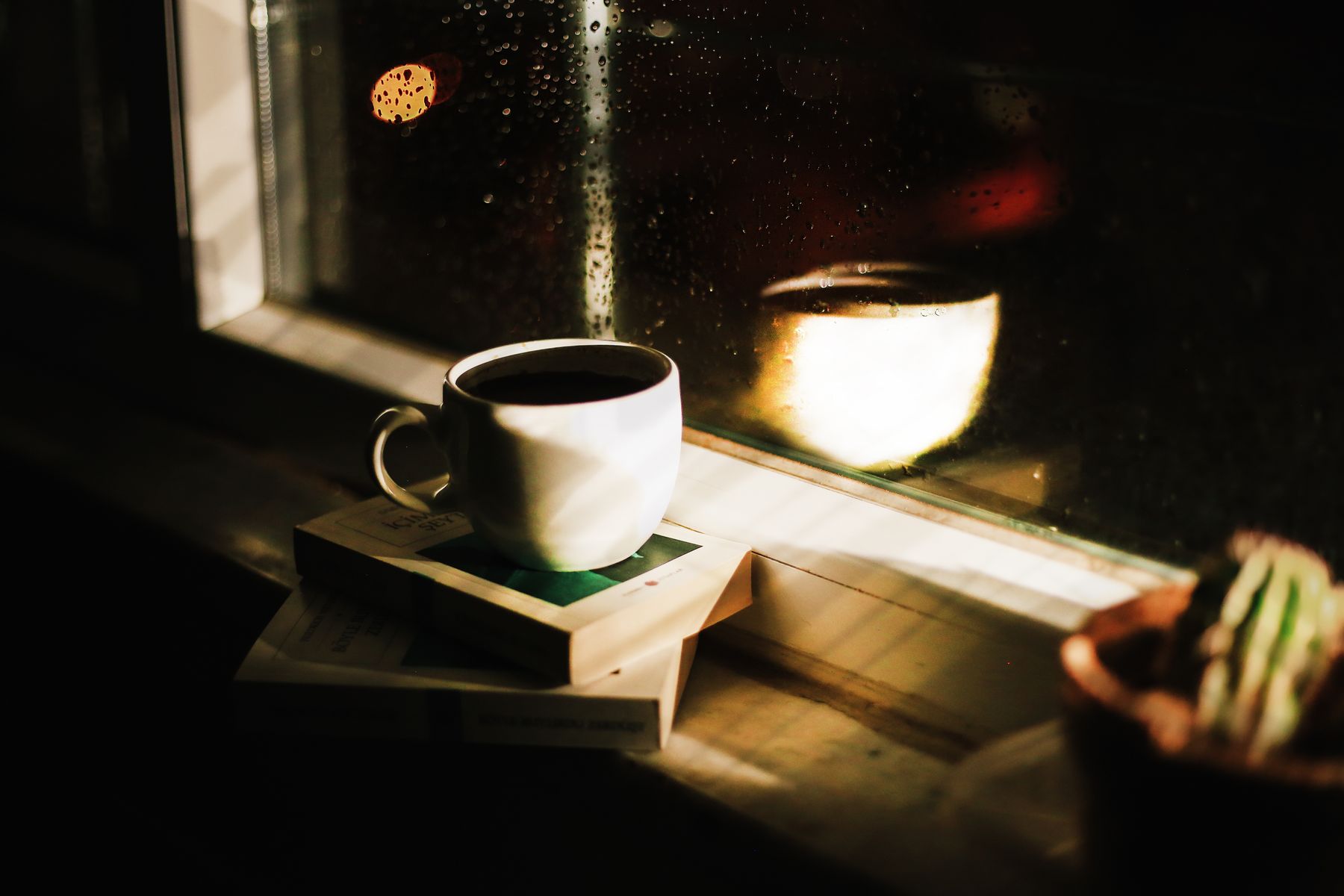
Walk into most rooms after dark and the first thing anyone does is reach for the switch by the door. The ceiling light comes on, the room appears all at once, and something about it is immediately worse. Flatter. Louder. A little like an office.
This is a piece about not reaching for that switch.
Light with a direction
Light from the ceiling has no direction. It comes from above, evenly, and it makes every surface equally lit and equally unimportant. Light from a lamp has a direction. It lands on the table and the book and the near side of the cup, and it leaves the far wall to itself.
A room with directional light has a foreground and a background. It has somewhere to sit and somewhere to not be. It has, for the first time since the afternoon, a shape.
The one lamp
The right lamp is lower than you think. Table height or lower. A floor lamp that lights the ceiling is just a ceiling light that took the long way round. The shade should be a warm colour or a paper one; a white shade with a bright bulb is the office again, in a smaller box.
Put it in a corner, not the middle. The middle of the room is where ceiling light lives, and the lamp should not be trying to do its job. The corner gives the light a wall to fall across, and light falling across a wall is most of what makes a room feel like evening.
Light you can see by is not the same as light you can sit in.
What one lamp does
With one lamp on, three things happen that nobody plans.
- People sit closer together, because the light is where the sitting is.
- Voices drop, because there is no reason to fill a room that has quietly got smaller.
- The window becomes a window again, dark and reflective, instead of a black rectangle in a bright wall.
None of these can be arranged directly. Turn on the lamp and they arrive.
Two lamps
Sometimes one is not enough. A large room, or two people doing two things. Then a second lamp, but in the opposite corner, and dimmer. Never two of the same brightness. Two equal lamps make a room even again, and even is what we were trying to leave.
The switch by the door
You will still need the ceiling light. For finding a dropped earring, for cleaning, for the morning in January when the lamp is not enough to see the toast by. Use it and turn it off. It is a tool, not an atmosphere.
But in the evening, walk past it. Cross the dark room to the corner, find the small switch on the cord with your fingers, and let the room come on from one point. It takes about three seconds longer than the switch by the door. Those three seconds are the beginning of the evening.